On June 26, I gave my first lightning talk at a Women in Product event about members’ fitness routines and sports backgrounds. Each speaker had five minutes before being cut off, wherever they were in the story.
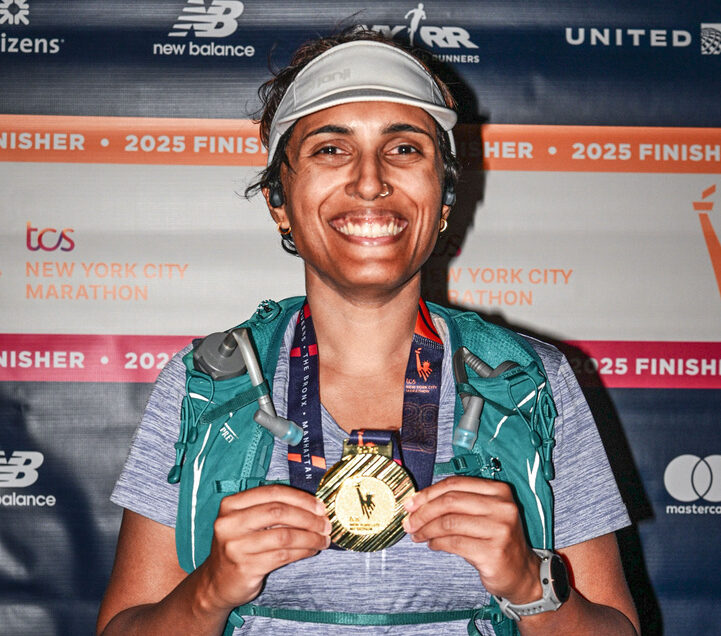
I shared what I learned training for the New York City Marathon, which I ran last November. Training gave me plenty to talk about, including a few lessons I keep coming back to at work.
Plans are allowed to change
When I signed up for the marathon, I thought I knew what I was getting into: make the plan, follow the plan, cross the finish line.
My body, however, had other ideas. I got injured in week two.
At first, every adjustment, skipping a run here or cross-training on the bike there, felt like falling behind. Eventually, I realized that getting to the starting line healthy mattered more than following the plan perfectly.
Product roadmaps ask for the same flexibility. A plan gives me somewhere to start. It also needs room for what I learn along the way. That’s part of why I’ve been investing in getting feedback before we build: I want to find out where the plan needs to change while there’s still time to adjust it.
Support and tools matter
I worked with a coach. Friends and family reminded me that one bad run didn’t mean the whole plan had failed. On race day, total strangers cheered for me as if they were personally invested in my success. It was very moving (and also overstimulating).
Running can look like an individual sport, but I had a lot of people helping me get to that finish line. Product work depends on other people, too. No product manager ships anything alone.
Having the right tools helped: shoes that worked for me, a watch to track training, fuel I could tolerate, and recovery gear. But I still had to decide how to use them.
I think about that when I use AI at work. My Garmin gives me data. It doesn’t decide what I should do with it. I still need to pay attention to how I feel and make a judgment.
Measure your own progress
There is always someone faster. Comparing myself to them didn’t help me train. Looking at my own progress did.
In January 2024, I spent three and a half hours on a route at roughly 15 minutes a mile. By September 2025, I covered that same route in just over three hours, closer to 13 minutes a mile. Seeing that improvement meant more than knowing where I stood next to another runner.
Even with a plan, support, and the right tools, I still had bad runs. I still got injured. Some days, showing up meant adjusting what I could do.
That’s something I want to carry into product work: being willing to change the plan without treating the change as failure. During marathon training, that meant skipping a run when I needed to and giving myself a chance to reach the starting line healthy.